The Science Behind Our AI 'Pet-sonality' Test
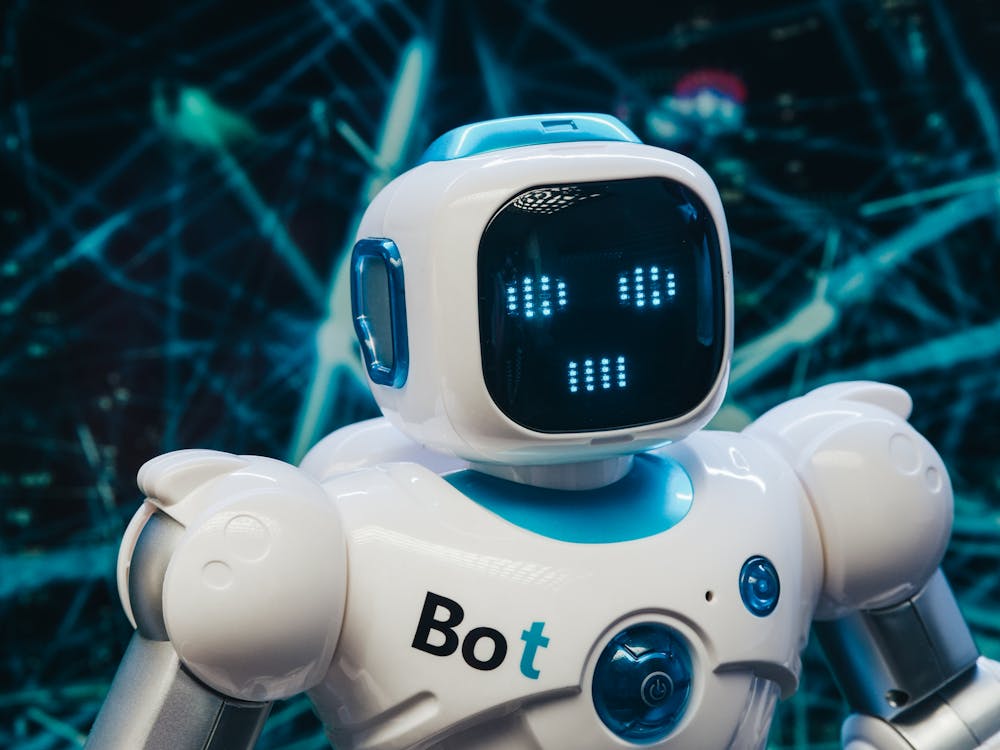
Have you ever wondered what’s happening behind the scenes when you use our Animal Face Test? It might seem like magic, but it’s actually a fascinating field of computer science called Machine Learning. Let's break down the core concepts in a simple, easy-to-understand way.
What is Machine Learning?
At its heart, machine learning is a way of teaching a computer to recognize patterns without being explicitly programmed for every single detail. Instead of writing strict rules like "a cat has pointy ears and whiskers," we show the computer thousands of examples and let it figure out the patterns on its own. It's like teaching a child by showing them pictures and saying "this is a cat," and "this is a dog."
Training the Model: A Digital School for AI
The "brain" of our test is a "model." To create this model, we used a powerful tool called Google's Teachable Machine, which simplifies the training process. Here’s how it works:
- Data Collection: First, we needed a lot of data. We gathered thousands of images, carefully separating them into two main categories: "Cat" and "Dog." It's crucial to have a diverse dataset, including different breeds, angles, and lighting conditions.
- The Training Process: We then fed these images into the Teachable Machine platform. The underlying algorithm, a type of neural network, analyzed every single image. It looked for common features—textures, shapes, distances between facial features—that consistently appeared in one category but not the other.
- Learning and Validation: The model adjusted its internal parameters over and over again, getting better at distinguishing between a cat and a dog with each pass. After training, it tests itself against images it hasn't seen before to see how accurate it is.
The result is a compact, efficient model that contains all of this "learned" knowledge, ready to make a prediction.
How Does It Predict Your Face?
When you show your face to the webcam, the model isn’t actually thinking "you look like a cat." Instead, it's performing a mathematical comparison. Your face has certain features—the distance between your eyes, the shape of your nose, the curve of your mouth. The model analyzes these features and finds which of its trained categories ("Cat" or "Dog") shares the most similar statistical patterns. The prediction is simply a probability score based on this pattern matching.
Privacy and Security: It All Happens in Your Browser
One of the most important aspects of our tool is that your privacy is paramount. The entire process—from accessing your webcam to making a prediction—happens right inside your web browser. Your image is never sent to our servers or stored anywhere. This is made possible by modern JavaScript libraries like TensorFlow.js, which bring the power of machine learning directly to you. Read more on our Privacy Policy.
We hope this gives you a clearer picture of the technology behind Popick. It's a fun example of how accessible and powerful AI has become! Ready to try it again? Test your Pet-sonality now!